Authentic Kashmiri Chai: History, Craft, and Contemplation
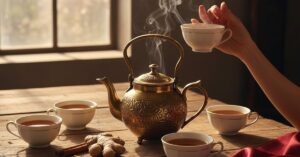
It begins with a pale dusting of pink. The edges of the copper kettle are still warm, and steam rises almost imperceptibly, curling into the morning chill. The first sip hits as a surprise—not bold or bracing as other teas might be, but soft, unhurried, robust only in its quiet persistence. This, too, is Kashmiri chai.
The Landscape of Kashmiri Chai
Kashmiri chai—also called noon chai or gulabi chai—is unlike any other variation of chai from India. Its roots lie in Kashmir, a region cradled between the Himalayas, often romanticized for its snow-covered valleys and saffron fields. But to speak of Kashmiri chai without speaking of Kashmir itself—its people, its winters, its quiet rhythms—would be incomplete. This tea is more than a beverage. It is a grammar for slower mornings, an implicit invitation to stop and linger.
The chai’s defining features are its pink hue and its saltiness—two qualities that immediately distinguish it from the spiced masala chai common in other regions of India. The pink color comes from a specific process of aerating the tea while boiling it with baking soda, a step unique to Kashmiri chai preparation. The saltiness reflects an older tradition, where salt was often added to tea in remote, mountainous regions both to preserve it and to complement rich dairy fats like cream or butter.
A Ritual of Slowness
The preparation of authentic Kashmiri chai is meditative in its precision. To brew the tea properly, one must begin with green tea leaves—Gunpowder tea is the most commonly used variety. These are simmered gently with water and a pinch of baking soda, a humble ingredient that works quietly, coaxing the green tea into a deep mauve. This is not a rapid process. The tea must be stirred and aerated with care, allowed to churn with oxygen until its transformation is visible.
Milk is added next, thick and unhurried, blooming the mauve into its signature blush pink. Some recipes call for a sprinkling of cardamom or crushed almonds at this stage; others embrace the spareness of salt alone. The final result is complex but unassuming, its true richness unfolding only after multiple sips.
History in Every Cup
To drink Kashmiri chai is to drink from a cup full of history. The tradition of tea itself in the region is believed to trace back centuries, influenced by Central Asian customs that arrived along ancient trade routes. Kashmir’s connection to Persia and Turkic cultures brought tea into its culinary repertoire, but this local adaptation—the pink, salted brew—developed uniquely within its borders.
The word noon in noon chai derives from the Kashmiri word for salt, rather than the English word referring to mid-day. Though modern iterations of Kashmiri chai are often sweetened, historically chai with salt was served alongside bread or lavasa, forming the heart of breakfast tables and communal snow-day teatimes.
In Kashmir’s colder months, chai becomes indispensable. With temperatures plunging across valleys and alpine plateaus, the tea is simultaneously warm sustenance and shared ritual. Copper kettles, called samovar, are carried to gatherings, their bellies filled with simmering noon chai. “Chilling snows can be softened,” this act seems to say. “Stillness is bearable together.”
Chai and Contemplation
Like all forms of tea, Kashmiri chai lends itself effortlessly to the pause—the simple act of slowing down, allowing a quiet moment its rightful space. The slowness of its preparation, in particular, mirrors the philosophical stance of Advaita Vedanta: the idea that stillness unveils truth. The simmering kettle mirrors the slowing of thought, the fierce pink of the final brew a gentle echo of deeper clarity.
Ramana Maharshi’s practice of self-inquiry—asking simply, “Who am I?”—is not unlike this method of brewing chai. Superficial answers, like the green hue of tea leaves at the beginning, must first pass through persistence and heat before their essence emerges. While you stir a pot of Kashmiri chai, observe this parallel: how heat transforms, how patience reveals.
Ingredients That Matter
Though simple in its recipe, Kashmiri chai insists on quality of ingredients. The green tea should be bold and tannic; the milk, full in its fat content. Baking soda, though minor in quantity, must be present for its alchemical properties. And like all chai rituals, the vessel matters. A proper samovar or copper kettle retains heat evenly, ensuring gentleness in the boil.
At Yogic Chai, this emphasis on quality and slowness is central to our identity. The tea blends we craft, like Kashmiri chai, are designed with reverence for tradition—for the quiet spaces where tea becomes more than something warm in your hands. They represent the contemplative life we believe in: specific, thoughtful, unhurried.
How to Brew Authentic Kashmiri Chai at Home
While it is tempting to rush the process, Kashmiri chai resists haste. Follow this method carefully:
- Start with Gunpowder green tea: Good quality leaves will determine much of your success.
- Add baking soda: Just a small pinch, immediately upon boiling the tea leaves. Stir steadily.
- Simmer and aerate: Allow the tea leaves to boil gently for 10–15 minutes, stirring intermittently to let oxygen interact.
- Add milk: Bring the heat down and pour milk slowly, watching the color shift into a soft blush pink.
- Add salt: Start with half a teaspoon and adjust according to taste.
- Optional garnish: Crushed almonds, pistachios, or a pinch of cardamom can elevate the final presentation.
Serve the chai warm, preferably in a ceramic or copper cup, and let the first sip carry you into slowness.
The Pause That Anchors
As autumn folds into winter and mornings become sharper, Kashmiri chai earns its place as a drink of sustenance. But more than sustenance alone, it offers an anchor. The gestures involved—from stirring to sipping—are the gestures that return us to ourselves. A kettle whispers; a cup steadies. Perhaps in the preparation of this tea, you will find what many have in Kashmir: a ritual far larger than the sum of its parts.
For thoughtful afternoons and unhurried mornings, let Yogic Chai guide your ritual. Explore the blend. Consider the pause.