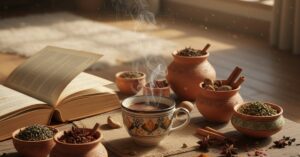
Chai Masala Spice Ratios: Crafting the Perfect Balance
A well-made cup of chai is no accident. It is a quiet negotiation between spices, heat, and time — an act of balance. Push the cloves too far forward, and they dominate every sip with their sharp, medicinal bite. Be too shy with the cardamom, and the blend loses its floral warmth. The alchemy lies in the ratios. How much of each spice? How little? And why?
If you’ve stood over your stovetop with an assortment of seasonings, uncertain of the proportions, you’re not alone. Unlike a recipe with neat, numeric measurements, chai masala has always been more intuition than arithmetic. But intuition, like any skill, has rules. This piece is for those who wish to understand those rules — not just to follow them, but to bend them with intention.
The Philosophy of Ratio: Chai as a Microcosm
At its heart, chai masala reflects a truth central to Advaita Vedanta: unity exists within multiplicity. Much as the self contains the infinite — the steady awareness behind the shifting phenomena of life — so too does a properly balanced chai masala contain the fullness of its ingredients. No single spice acts in isolation; each finds its place in relationship to the others.
Cloves, fiery and assertive, can only shine when grounded by cinnamon’s sweetness. Black pepper needs ginger’s warmth to avoid seeming abrasive. Balance is not symmetry; it is a dynamic interplay. A pinch of black pepper holds as much importance as a heaping teaspoon of cardamom. Each element matters, but context is everything — an idea worth taking beyond the kitchen.
The Foundation: The Core Spices of Masala Chai
A classic masala chai blend typically consists of five primary spices:
- Cardamom: Sweet, floral, and slightly citrusy. Provides the fragrant top notes that linger after each sip.
- Cinnamon: Warm and grounding, with a sweetness that softens sharper spices.
- Cloves: Pungent and sharp, bringing a medicinal brightness that cuts through the richness of milk.
- Ginger: Fresh or dried, ginger adds heat and a zesty sharpness that enlivens the blend.
- Black Pepper: Earthy, fiery, and assertive, black pepper provides depth and a subtle burn in the finish.
From here, variations abound. Fennel seeds can add a licorice-like sweetness; nutmeg, a touch of bitter warmth. Star anise, saffron, or even dried rose petals appear in regional or experimental blends. Yet, the core remains the same: spices that elicit warmth, complexity, and balance.
The Ratio That Works
For those seeking a starting point, consider the following base ratio for a single batch of chai masala:
- 4 parts cardamom
- 3 parts cinnamon
- 2 parts ginger (dried powder or fresh, grated at the time of boiling)
- 1 part cloves
- 1 part black pepper
This ratio privileges cardamom and cinnamon, creating a sweet and fragrant profile while assigning spice and heat supporting roles. Adjustments can be made to suit individual preferences or seasonal changes. For a winter chai, you might double the ginger for extra warmth. In the summer, a lighter hand on cloves can make the brew feel less heavy.
Cultural Variations: Chai as Geography
India, vast and diverse, has no singular way of making chai. Regional variations reflect local climates, tastes, and traditions. In Gujarat, fennel seeds often join the mix, cooling the heat of ginger and black pepper. In Kashmir, saffron lends an ethereal golden hue to the brew. Masala chai in Tamil Nadu sometimes incorporates whole coriander seeds, adding a citrusy brightness.
Even within families, there are debates. Kitchens become sites of negotiation, as grandmothers and grandchildren disagree over whether a pinch of nutmeg is obligatory or heretical. These variations are not deviations from some imagined “authentic” standard; they are the standard. Chai is, fundamentally, a reflection of those who make it.
The Ritual: Ratio as a Meditation
Measuring spices is often treated as a functional step — the means to an end. Yet, it can be its own contemplative act. Consider the deliberate motion of placing cardamom pods into a mortar, the grounding heft of the pestle in your hand, the fragrance released as each pod opens. There is no rush here. Preparing masala chai is an act that insists on slowness.
Slowness, of course, is its own philosophy. Where modernity prizes efficiency, the ritual of chai-making suggests something else: presence. The physical weight of a cinnamon stick, the crackle as it splits into shards, the sound of spices meeting bubbling milk — all conspire to bring the practitioner out of thought and into sensation. The ratio becomes less about precision and more about relationship.
Experimentation: Playing at the Edges
Once you’ve learned the core ratio, experimentation feels less like chaos and more like jazz. Add a small handful of fennel seeds to the pot. Strip a few threads of saffron for a luxurious touch. Or venture into subtler territories: a single bay leaf can add an unexpected woody depth, while pink peppercorns create floral, fruit-tinged heat.
The key is to try changes one at a time, observing how they affect the balance. Keep notes. Write the date, the proportions, the ambient temperature outside if you like. A chai blend is not unlike a life’s path: best understood retrospectively, through the patterns left in its wake.
Conclusion: Chai as an Invitation
The discourse around chai masala spice ratios may seem trivial at first glance, but it soon reveals itself as a meditation on balance, presence, and individuality. The ratios you adopt, refine, or wholly invent will become part of your own ritual — a tiny, fragrant rebellion against the speed and vagueness of the modern world.
So, begin where you are. Approaching the kitchen, spices in hand, is like stepping onto the path suggested by the sages: with curiosity and full awareness. Over time, you’ll find your rhythm, your center. And when you sit down, cup in hand, the drink will taste like nothing less than your own considered life.
For those who’d like a trusted starting point, the YogicChai blend offers a carefully crafted masala base, grounded in tradition yet endlessly adaptable. Try it as it is, or let it inspire your next experiment. The journey is yours — as it always has been.