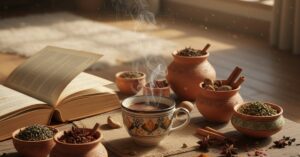
The Scented Symphony of Cardamom Ginger Chai
The moment a waft of cardamom meets ginger’s sharpness, you find yourself tracing an invisible line back through time. It’s a journey within, an invitation to stillness. With a cup of chai at your side, the world seems to pause, leaving room for thought and presence. Yogic Chai, with its roots in Indian contemplative philosophy, invites you on this journey—not merely as a beverage, but as a connection to a calmer state of being.
Cardamom and Ginger: A Harmonious Duality
The partnership of cardamom and ginger in chai is more than a culinary choice; it’s a symphony of flavors that resonates with age-old traditions. Cardamom, with its aromatic sweetness, dances gracefully on the tongue. Ginger, bold and lively, brings warmth. In Ayurvedic medicine, cardamom has been valued for its calming effects, aiding digestion and invigorating the spirit. Similarly, ginger is hailed for its warming qualities, traditionally used to kindle internal fires and bring balance to cold bodies.
The Philosophy of Flavor
In Advaita Vedanta, we talk about unity—how everything boils down to the same essence. Cardamom and ginger represent a microcosm of this philosophy, blending seamlessly in a cup of chai. As you sip, you’re reminded of the interconnectedness of experience, the merging of the individual with the universal. This isn’t a metaphor; it’s a direct experience. A meeting of spice and warmth that mirrors life’s inherent unity.
A Time-Honored Ritual
The act of brewing chai is a ritual of its own. On an early winter morning or amidst the calm after a monsoon shower, the allure of chai binds communities and moments. In India, chai stands as a cultural pillar, solidifying its role beyond mere refreshment. It marks social transitions and eases solitude—a shared language in train stations and roadside stalls.
The ritual of making chai encourages patience. Every step—grinding the cardamom, slicing the ginger—becomes a meditation, a practice aligning with nature’s rhythm. This ritual is a testament to the art of waiting, where each minute embodies mindfulness.
Embodying Stillness
With a cup of Yogic Chai in hand, the practice of presence becomes tangible. The sensation of warmth against cold hands serves as a gentle reminder of here and now. The spices awaken the senses, inviting you into a conversation with yourself that goes beyond words. Here lies the magic—a practical engagement with your surroundings.
Intricacies of a Cultural Tapestry
In the heart of Indian chai culture, every cup tells a tale—a narrative woven with threads of history and social nuance. From the bustling platforms of Howrah to quiet corners in Ladakh, each chai has a local story. It is not only the beverage that varies, tracing regional palates and personal preferences but also the way chai is shared—often from the tiny hands of chai wallahs whose creations bind communities.
Beyond First Impressions
To understand chai is to recognize its role not just as a drink but as an integral expression of hospitality and friendship. It is a moment of intention, a pause that brings people together across continents, serving as a gentle handshake in a bustling universe.
Culinary Craft
Consider the transformative alchemy of chai spices in baking. In the right hands, these spices craft more than flavor; they carve experiences. Cardamom’s floral whisper pairs with vanilla, a perfect melody in a butter cake. A chai reduction becomes the secret ingredient to a spiced pastry that evokes warmth and nostalgia.
Chai’s culinary versatility makes it an artist’s palette, a fusion of improvisation and tradition. When you pour Yogic Chai into your culinary adventures, it transitions from a simple beverage to a creative muse.
Conclusion
Embracing cardamom ginger chai is to embrace the rich tapestry of history and philosophy that stretches across time and culture. In its aroma lies a world of contemplation, an exploration both intimate and expansive. If you let it, a cup of Yogic Chai may become a daily anchor, a pathway back to the essence of thoughtful living.