The Art of Chai: Philosophy and Flavor Unwoven
It was a brisk morning in the narrow lanes of Old Delhi where I first encountered the quiet power of chai. The chatter of vendors merged with the honks of rickshaws, creating a symphony that was both chaotic and harmonious. Amid this orchestra, I found a moment of tranquility with a simple cup of steaming chai in my hand. This seemingly humble concoction, effortlessly woven into the fabric of daily life, holds in its embrace not just a blend of spices but a tapestry of philosophy and history.
The Philosophy of Stillness in a Cup
Chai, at its core, invites us into a ritual of stillness and presence. In the contemplative tradition of Advaita Vedanta, the pursuit of truth rests in the recognition of the self’s union with the ultimate reality: Brahman. This philosophy offers an unhurried exploration of the self, a deliberate movement away from the cacophony of distractions. Much like those teachings, the act of preparing and savoring chai demands a similar introspection.
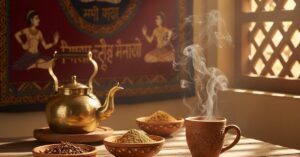
Consider the words of the sage Ramana Maharshi, who taught the practice of self-inquiry — a method of turning one’s attention inward to understand the fundamental nature of the ‘I’. Engaging with a cup of chai can mirror this inward journey. One finds significance in every step of its preparation: the gentle crushing of cardamom pods, the boiling of Assam leaves until their rich aroma fills the air. It is an embodiment of focused awareness, where every action has purpose and consciousness.
Sovereignty in the Ritual
While philosophy invites observation of the self, chai encourages a celebration of that discovery through ritual. The sovereignty of individuality, as touched upon by thinkers like John Locke and enduring through the vistas of Advaita, emphasizes the primacy of self-established truths. The process of chai-making is itself an exercise in personal sovereignty, where choices reflect personal narrative and preference.
Individual choices in chai recipes — the amount of ginger for heat, the sweetness from jaggery — create a personal landscape where individual sovereignty shines. This sovereignty doesn’t only pertain to choice but extends to the genuine acknowledgment of one’s tastes and preferences, unhindered by external influence.
Traditional Wellness: A Spice Haven
Step into the heart of chai and you find a fascinating dance of spices, each carrying with it whispers of tradition and wellness. Cardamom, ginger, and cloves are more than just enhancements for flavor; they connect us to centuries of Ayurvedic wisdom. These ingredients, carefully selected and blended, offer a view into the traditional uses of spices not as ‘miracle’ fixes, but as partners in fostering overall well-being.
Ginger, for instance, has been traditionally used for its warming properties. In Ayurvedic texts, it’s often recommended to ignite the digestive fire, known as Agni. Modern studies may explore these benefits, but chai doesn’t rely on claims; it offers an experience, a sip by sip journey that integrates mind, body, and spirit without overstatement or embellishment.
A Ritual Rooted in Culture
Within India’s vibrant tapestry, chai transcends a mere drink to become a cultural emblem. The chai wallah, a fixture of every street corner and railway station, becomes a custodian of both sustenance and conversation. Here, chai serves as an agent of social cohesion, facilitating dialogues that span from mundane to the profound.
Whether during the bustling rhythm of a monsoon afternoon or the calm start of a winter morning, the role of chai remains steadfast. It marks time, providing a pause for reflection amidst life’s relentless march. Understanding this deeply held cultural significance offers a glimpse into a practice that structures communication and reflection in Indian society.
Culinary Artistry: Chai in Culinary Imaginings
The infusion of chai into cuisine offers an extension of the drink’s ethos — a nurturing embrace of flavors that tells a story. Imagine a butter cake imbued with the aromatic dance of cinnamon and cardamom. There’s craft in recognizing how these spices transform butter or how a chai concentrate might create a base for a sauce.
Such culinary endeavors are not hurried feats but contemplative processes, where the YogicChai blend anchors creativity. These are not mere recipes but musings over flavor and essence, where each culinary piece emerges from thoughtful experimentation, mirroring how a chai cup is both creation and creator of a moment.
Finding Meaning in Every Sip
In a world seemingly obsessed with speed, the art of chai insists on the worth of slowness. It asks for pause, for savoring. Just as the teachings of Advaita Vedanta or the declarations of personal sovereignty compel us to inspect every facet of our existence, chai extends this inquiry — spoon by spoon, drop by drop.
Culturally curious and philosophically inclined individuals find in YogicChai a reflection of themselves. No hurried comforts or simplified truths, but a slow, deliberate intention brewed in each cup. It’s the chai wallah at dawn, the patient unfolding of leaves and water, and, ultimately, the revelation that comes not from the drink itself but what it draws us towards — contemplation, connection, and conscientious being.