Yogic Chai: A Thoughtful Exploration of Individual Sovereignty
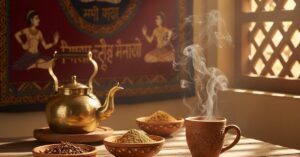
In a quiet corner of the world, where the steam from a cup of chai rises slowly in a sunlit room, there’s an exploration waiting to unfold. This exploration is not of distant lands, nor of bustling cityscapes, but of the world within—the sovereign self. It is here that we find Yogic Chai, not merely as a blend of spices and tea leaves, but as a reflection of a deeper journey.
The Essence of Individual Sovereignty
Sovereignty, at first glance, may evoke images of political dominions or ruling sovereignties. Yet, in the realm of Yogic Chai, it draws from the profound wellsprings of individual consciousness—our inner authority. This journey towards self-sovereignty is echoingly present in the teachings of Advaita Vedanta, the core of which proclaims that the Self is Brahman. But what is this path to recognizing the Self’s sovereignty?
Advaita Vedanta: Beyond the Teachings
Advaita Vedanta offers a realization: the Self and the ultimate reality (Brahman) are one. This philosophy beckons a contemplative practice, a slowness that resonates with each sip of chai. To break down the grand proclamations into daily life, consider the act of sitting with a chai cup—ordinary, yet profound in its ceremony.
When Nisargadatta Maharaj speaks of “I Am,” he refers not just to existence but to recognition—an awareness that dismisses the fluctuating identities we often associate with ourselves. Ramana Maharshi’s practice of self-inquiry differs from mere reflection. It’s a deeper questioning: “Who am I?” This persistent inquiry aligns with the ritualistic slowness of chai, where each moment of stillness becomes an answer.
The Sovereign Self: Navigating Inner Territories
Our lives, much like a perfectly brewed chai, involve a balancing act. The dignity of being human comes not from external validations but from an inner witness that no external authority can override. Here, Yogic Chai acts as a gentle reminder of this sovereignty.
Philosophical Parallels: Eastern and Western Thought
Drawing from John Locke’s classical thoughts on natural rights and Overton’s conception of an inviolable self, we see the sovereign self emerge not as revolutionary rhetoric but as a meditative realization. It is about living in harmony with one’s conscience, recognizing the inner monarch within that commands with neither force nor fervor but with quietness akin to a chai-infused reverence.
In these contemplative practices, Yogic Chai becomes a conduit, linking the philosophy with everyday life. Its ritualistic preparation and consumption parallel the measured consideration required to navigate the complexities of self-sovereignty.
Traditional Wellness in a Cup
Each ingredient in chai—from the invigorating ginger to the grounding quality of black tea—is steeped not only in water but in history and tradition. Ayurveda suggests that these spices, when combined, may support balance and wellness. Ginger is traditionally used for its warming properties, while cardamom might aid digestion.
These ingredients, blending together in Yogic Chai, reflect a journey through cultural wisdom, offering not just nourishment but insight. Remember though, these are not mere “superfoods,” but elements of a holistic practice that honors the body, mind, and spirit.
Nature, Ritual, and the Art of Stillness
The act of drinking chai is an invitation to pause. As you hold your cup on a winter morning, observe how the warmth infuses your hands, how the aroma envelops your senses. Such moments of stillness craft an understanding beyond words, one that speaks the language of nature.
The Phenomenology of the First Sip
In a world where urgency often drowns the quiet, the act of sipping chai becomes a declarative practice of resistance. The first sip, introductory yet profound, echoes the morning birdsong or the first ray of sunlight—simple, yet transformative.
When you embrace the act of chai as a ritual, every aspect becomes a moment of meditation—no motivational clichés needed, just the raw experience of existence itself.
Chai and Indian Culture: A Tapestry of Time
To speak of chai in India is to engage with the very spirit of its culture. The chai wallahs, with their kettles and rhythm, offer more than tea—they offer community. On a train platform, amid the bustle, chai becomes a moment of togetherness. In these moments, chai is not a token of hospitality; it’s an anchor.
Cultural Significance Beyond the Cup
From monsoon-evoking conversations to the simple pleasure of a kulhad chai, each sip interlaces with cultural significance. It structures time, and marks transitions, weaving through the life of a people as seamlessly as it blends spices and tea.
For the culturally curious, understanding chai is to understand a living tradition, rich with narratives waiting to unfold over countless cups.
Culinary Insights: The Craft of Chai
The journey of chai does not end with a sip. It extends into the realms of culinary creation. Consider the pairing of cardamom and vanilla in a humble cake, or the warmth of masala spices in a winter stew. The Yogic Chai blend is an artist’s palette, its potential as an ingredient limited only by imagination.
Imagine a chai reduction used to infuse depth into a dessert glaze, each spoonful bearing the hallmarks of care and intention. This culinary craft reflects the patience and artistry that distinguishes a concoction from a creation.
In the quiet company of your next cup, at the intersection of thought and flavor, find your place with Yogic Chai. It’s not merely a beverage; it’s an entryway into understanding the self, the world, and the gentle art of being.