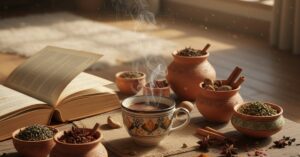
Yogic Chai: Exploring the Philosophy and Rituals within Each Cup
It begins with a sound — the low, rolling boil of water, a hum of anticipation. The kitchen fills with the fragrance of spices, each scent a note within the symphony of humanity that is Yogic Chai. Imagine the unhurried act of preparing a cup of chai, steeped not only in spices but in ancient philosophy and tradition. This is not mere consumption; it is a ritual, an exploration of meaning that flows through the veins of Indian culture.
The Philosophy of Stillness
Advaita Vedanta, a cornerstone of Indian philosophy, challenges the duality of the world, proposing instead the unity of soul and existence. At its heart, the teaching of ‘Tat Tvam Asi’ — ‘Thou art That’ — invites contemplation. In the presence of a steaming cup of chai, one finds a parallel. The act of pausing to sip chai embraces a stillness, a oneness. It is an echo of what Ramana Maharshi describes with his practice of self-inquiry. Here, the questions dissolve into the aroma, the heat, the liquid gold at once incorporating an ephemeral sense of peace.
The Sovereign Self in Every Sip
The invited introspection in a cup of chai coincides with the philosophy of individual sovereignty. Each person is their own authority, responsible for their journey. John Locke’s views on conscience and Advaita’s emphasis on the irreducible Self align here. Sitting with a chai, one participates in a ceremony of clarity and self-assertion, answering first to inner conscience.
Exploring Traditional Wellness in Ingredients
Chai is a quilt of spices, each one bearing historical and medicinal significance. Ginger finds mention in Ayurvedic texts for its warming properties, much like the grounding wisdom of the sages. Cardamom, known for its soothing qualities, parallels the gentle unrolling of philosophical questions. Assam tea provides a robust backdrop, much like the essential text of the Upanishads, strong yet subtle in persuasion. These are not mere ingredients but conversations stewing in a teapot, each with a story to articulate.
Nature and Ritual: The Essence of Pausing
There is a unique sanctity in holding a warm cup, a physical anchor that moors one to the present. The first sip on a winter morning is akin to the first breath of fresh mountain air — sharp, awakening, full of possibility. Stillness seems to emerge naturally when fingers wrap around the warm, round surface of a chai cup. Therein lies a meditation, a natural state of pause without conscious effort. Being present doesn’t need to be mystical; it’s as natural as feeling a breeze or hearing the rain.
Chai in Indian Culture: More Than a Beverage
In the bustling streets of Mumbai, the chai wallah becomes a poet of daily rhythm, infusing the air with cardamom, ginger, and stories. Trains pause in patience for the clinking of glass to cease, for chai is not merely a refreshment but a cultural ritual. It marks transitions — seasons, moods, even strangers turning into friends over a shared moment. Each region in India holds its version, the same way each person brings their nuances to a conversation. Chai here is an introduction, a farewell, a pauses between steely edges of life.
The Culinary Art of Chai
Imagine a dessert infused with chai spices, a butter cake laced with masala essence. It is art. The marriage of cardamom and vanilla is more than flavor; it’s a whisper from the East meeting the West at a shared table. Use a chai reduction to build layers of warmth and depth in your culinary explorations. The Yogic Chai blend, not just a drink but a versatile ingredient, helping elevate simple recipes into multidimensional experiences. It’s a creative undertaking that requires wisdom as much as it invites imagination.
With every cup of Yogic Chai, you pick up not just a beverage but a thread of intricate history, philosophy, and cultural depth. It invites you not to ‘be present’, but to simply be, unyoked from clichéd inspirations and standing instead in genuine knowledge and presence. Explore, sip, and repeat — not as a routine but as a ritual.