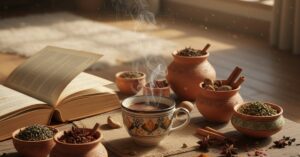
Yogic Chai: A Journey into Thoughtful Slowness and Specificity
There is a peculiar stillness that accompanies the ritual of brewing and savoring a cup of chai. It’s an act that requires attention, intention, and an openness to experience. In the same way, Yogic Chai draws us into a philosophical realm that celebrates slowness and specificity, offering a refuge from the barrage of vague inspiration and hurried consumption that often defines our era.
The Philosopher’s Cup: Advaita Vedanta and the Art of Chai
As you sit with a steaming cup of chai, consider the words of Ramana Maharshi, whose practice of self-inquiry involves asking the simple yet profound question: “Who am I?” This is not mere navel-gazing, but a focused contemplation that parallels the meticulous process of chai preparation. Just as each ingredient in the chai serves a purpose, every element of this inquiry is designed to peel away layers of distraction, bringing you to a core understanding that the Self is Brahman. It’s a realization that in stillness, all becomes clear, much like the settling of spices in a perfect brew.
Self-Sovereignty in a Cup
Integral to the philosophy behind Yogic Chai is the concept of individual sovereignty. In a world teeming with external authorities vying for our allegiance, the simple act of choosing one’s own path becomes radical. This autonomy is echoed in the writings of John Locke and the philosophy of natural rights, where the sanctity of personal conscience is revered above all. In the context of chai, this sovereignty is symbolized in the personal decisions of brewing — the choice of spices, the timing of steeping — reminding us that no one but ourselves can dictate the sanctity of our own ritual.
Ingredients of Tradition
The spices of chai are not just culinary choices; they are steeped in Ayurvedic tradition and centuries of wisdom. Consider ginger, with its warming properties traditionally used to invigorate and stimulate. Or cardamom, a spice revered for its cooling and calming effects. In the dance of these flavors, there’s a historical narrative that transcends modern wellness marketing. Research may suggest that ginger supports digestion or cardamom promotes heart health, but these insights are mere annotations in the grand tale of cultural and historical chai consumption.
Nurturing Nature and the Rituals Within
The ritual of chai drinking is an invitation to step away from chaos and into a pocket of calm. Imagine rain softly tapping at your window while you hold your cup, the waft of spices mingling with the fresh scent of earth. This is not just serenity but a tactile engagement with nature and self, underscoring the essence of phenomenology—experiencing life fully, if only for a moment. Each sip becomes a part of this sensory tapestry, anchoring us to the present with the earthy embrace of Assam tea.
Chai: The Cultural Conduit
In India, chai is more than a beverage; it’s a cornerstone of cultural interaction, a shared language. From the bustling train platforms to the rainy streets of Mumbai, the ubiquitous chai wallah serves more than just tea. He is the steward of community, and the drink he serves bridges conversations among strangers, marking routine and passage in daily life. This cultural fabric is exquisitely woven into the history of chai, a story that speaks to its profound role beyond mere consumption.
The Craft of Culinary Chai
Incorporating chai into your culinary repertoire offers a realm of flavors waiting to be explored. The marriage of chai spices with the buttery richness of a cake can elevate the ordinary into something remarkable. Consider a masala-infused butter cake, where the hint of black pepper adds unexpected depth, or a cardamom-vanilla synergy that balances sweetness with aromatic complexity. Each culinary adventure with chai becomes a mindfulness exercise, reminding us of the care needed in both life and kitchens.
As we untangle the intricate threads of Yogic Chai, we are invited into a deeper, more contemplative existence. It’s a call to eschew the quick fixes of motivational soundbites and instead linger in the robust flavors of thoughtful engagement. Here, chai becomes not only an inevitable part of a considered life but a symbol of the slowness and specificity we cherish.