Yogic Chai: Crafting Quietude Through Culture and Philosophy
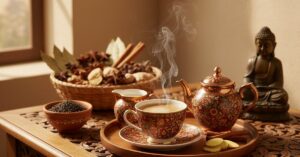
On a crisp winter morning, steam spirals gently from a delicate ceramic cup, curling upward as if tracing an invisible thread of thought. Sitting beside a window, the sun casting long shadows across the wooden floor, the act of holding a warm cup of chai becomes a microcosm of stillness, a pause that reverberates with the very philosophy of life itself. This is not just tea, but an invitation to explore the depth of Yogic Chai, a blend where culture meets contemplation, where history informs harmony.
The Subtle Philosophy of Stillness
Yogic Chai brews more than flavors; it evokes traditions deep-rooted in Advaita Vedanta — a school of thought that beckons us to understand the oneness of self and universe. The oft-quoted maxim, ‘The Self is Brahman,’ underscores that within the confines of individuality lies a boundless, unfragmented truth. Nisargadatta Maharaj’s assertion, ‘I Am,’ suggests an identity beyond labels and roles, a self-existing quality that a cup of chai may awaken during reflection. Through Maharshi’s teachings, self-inquiry becomes a serene practice, mirroring the gentle swirl of milk meeting black tea — simple, yet profound.
The Ritual of the Pause
The art of drinking chai is as ancient as the philosophies it complements. It is an excuse to slow down, to be present without the trappings of motivational clichés. Consider the first sip taken on a monsoon morning. The rain drums softly against the pane, and the chai warms more than just the body; it warms the mind to introspective quietude. This practice of pause, akin to a meditative ritual, allows the world to unfurl slowly, each moment as savorous as each spice in the blend.
The Sovereign Self in Chai and Life
Within each cup of Yogic Chai, there is a narrative of individual sovereignty, echoing a belief that resonates with Locke’s philosophy of self-governance and inner authority. A self that answers to no external arbiter but is guided by personal conscience. Like chai, which is brewed to personal taste and preference, life’s essence lies in autonomy, a philosophical self-determination that demands respect — respect both for self and for one’s journey.
Ingredients as Educators
The spices of Yogic Chai offer lessons in traditional wellness and cultural history, each ingredient steeped in Ayurveda and culinary tradition. Ginger, known for its warming qualities, has been used for centuries to aid digestion, its spicy kick resembling bitter truths one must accept. Cardamom, sweetly fragrant, whispers of love and balance, soothing both the heart and palate. These spices are more than culinary elements but heralds of an intricate past and promising present.
A Communication of Cultures
The chai culture of India, replete with its social rhythms, offers a window into a civilization where time is marked differently. The chai wallahs on bustling streets, the shared cups amidst rain-draped conversations — these are not mere backdrops but the societal canvas where chai operates as social glue. Chai is both an act and an artifact, a meeting point of lives and narratives, each cup a chapter in an ongoing story.
The Craft of Culinary Artistry
In the kitchen, chai transcends its liquid state to become a craft, a culinary muse inspiring creations that blend and balance. Imagine a butter cake gently spiced with the precise pungency of cloves and cinnamon — each slice a concert of texture and taste, akin to a philosophical debate where each argument enhances the next. Yogic Chai becomes a versatile ingredient, its masala spices infusing warmth and complexity into everything from oatmeal to intricate sauces.
Conclusion: Chai as a Catalyst for Connection
In contemplating Yogic Chai, consider its potential to be more than consumption — but a quiet catalyst. A catalyst for reflection, connection, and cultivation of thoughtfulness. In each considered sip lies the potential to explore quietude born of carefully measured moments and thoughtfully chosen thoughts. As you wrap your hands around your next cup, see it not merely as a beverage, but as an anchor to a composed, sovereign, and intentional life.