Yogic Chai: A Journey of Chai, Philosophy, and Culture
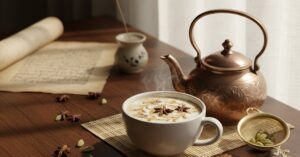
The gentle steam rising from a freshly brewed cup of chai can be more than a mere invitation to ritual; it can be an opening into deeper worlds. In the rich tapestry of Indian life, chai is not just a drink, but an art and philosophy, a cultural cornerstone woven with threads of history and contemplation. This journey of chai offers a space for reflection, grounded in Advaita Vedanta, where mind and matter, identity and oneness intersect.
The Philosophy of Stillness Found in a Cup
In the intricate philosophy of Advaita Vedanta, the idea that ‘the Self is Brahman’ becomes tangible, not as a symbol or abstract ideal, but as an experiential truth. Just as the steady hands of a chai wallah stir the simmering pot, unworried by the chaos around, one finds an allegory to the stillness cradled within the human psyche. ‘I Am,’ says Nisargadatta Maharaj, a declaration of existence that finds resonance in the simplicity of brewing chai — the confluence of distinct spices, distinct experiences, merging into a singular, sustaining moment. Ramana Maharshi’s teachings on self-inquiry invite us into a quiet reflection, echoing the unassuming allure of that first sip on a crisp autumn morning.
The Sovereign Adventure Within
Yogic Chai prompts an exploration of the sovereign self, suggesting that true authority lies within and not in external impositions. Drawing from the principles of Advaita and the philosophical musings of thinkers like John Locke, this notion grants a certain reverence for the human spirit — one not bound by corporeal limits, but instead guided by inner conscience. Holding a warm chai cuppa becomes an act of acknowledging one’s own existence, a silent bow to the dignity of being fully human.
Traditional Wellness: The Subtle Wisdom of Chai Ingredients
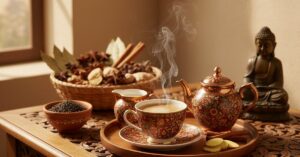
In every carefully crafted cup, each ingredient tells its own story. Take ginger, a traditional staple that has long held a cherished position in Ayurvedic wisdom, believed to aid digestion and invigorate circulation. Or cardamom, a spice of both warmth and clarity, celebrated for its supposed role in balancing doshas, creating an aromatic symphony when combined with cinnamon and cloves. Infused into the robust heart of Assam tea, these elements forge an elixir that holds more than just historical allusions but invites a genuine engagement with flavors anchored in both tradition and time.
Nature and Ritual: The Experience of Chai
Picture this: the rain falls gently against the window, rhythmic taps that syncopate with the stillness within. In the refuge of one’s kitchen, chai brews softly on the stove, filling the air with its embracing aroma, a ritual grounding for the soul. As a hand warms against the mug’s surface, the world outside blurs into an abstract painting, each sip a communion with the self, the moment, the fleeting reality of now. This silent dance with nature echoes the gentle ethos of Yogic Chai, where slowness is not a refusal but an embrace of living deeply.
Chai Culture and Its Multifaceted Role in Indian Life
In India, chai is more than a refreshment; it’s a communal pause, a shared breath among strangers on busy train platforms or intimate conversations during monsoon rains. The chai wallah, pouring with precision, becomes a transient maestro orchestrating social connections. The humble kulhad made of rustic clay serves not only as a vessel but as an environmental testament, each piece a tactile encounter with earth’s essence. These moments of intersection — where chai imbues time with tradition and continuity — highlight the indispensability of this simple, yet complex, beverage within the Indian narrative.
Culinary Craft: Chai as an Ingredient of Thoughtful Artistry
Imagine cardamom nestling alongside warm vanilla in a butter cake, each flavor note enhancing the other’s quiet brilliance. Therein lies the strength of culinary craft — the unexpected harmony born of intentional artistry, creating layers of experience. A steeped chai reduction can become the secret heartbeat of a dish, lending depth not as an overt force but as a shared undercurrent, much like the philosophical dance of opposites within Advaita Vedanta itself. In the kitchen, as in life, these thoughtful creations unfold when one takes the time to sit, sip, and savor each brushstroke on the canvas of existence.
Pausing with Yogic Chai, through both the simple pleasure of taste and the profound impact of reflection, connects us with an intricate web of culture, philosophy, and craft. Not as a destination, but as a journey — a chance for thoughtful adults to find enrichment in the mindful slowness, in the details that matter, in the chai that binds.