Yogic Chai: A Journey Through Time, Philosophy, and Craft
In an unhurried morning, as the first rays of the sun begin to kiss the earth, a quaint ritual unfolds in many homes across India—a ritual where water boils, spices blend, and rich aromas waft in the air. It is the art of making chai, an age-old tradition steeped in history and philosophy, much like the act of savoring the brew itself.
The Philosophy & Stillness of Chai
In the teachings of Advaita Vedanta, the essence of self-realization is encapsulated in the notion that the Self is Brahman. This profound realization invites a stillness that parallels the quietude of sipping chai alone at dawn. While scrolling messages buzz and news alerts flash, there exists a compelling alternative: the quiet presence of oneself with a cup of chai.
Renowned sage Nisargadatta Maharaj often expounded on the simple profundity of I Am. This phrase, devoid of complexity, channels awareness inwards—drawing a striking similarity to the uncomplicated act of focusing on the steam rising from a cup of chai. Ramana Maharshi’s self-inquiry questions demand the same sincerity that one might bring to the deliberate tasting of each spice in a chai blend.
The Sovereign Self in the Realm of Reflection
In a world teeming with noise, the act of making and enjoying chai becomes a testament to individual sovereignty. The brewing of chai is a personal observance—a rite that speaks to individual conscience without external imposition. In natural rights philosophy, champions like John Locke remind us that no authority is higher than the inner witness, an anthem to the dignity of being, echoed in the rhythmic dance of tea leaves and spices in boiling water.
The Sovereign Self finds solace in this slowness, much like the ancient introspections of Advaita Vedanta, where one is encouraged to dwell in self-awareness—just as one might linger over the last sips of well-brewed chai.
Traditional Wellness & Ingredients: Unveiling the Symphonic Blend
A Choral Exploration of Chai Spices
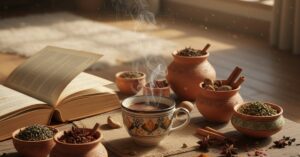
Every cup of Yogic Chai is a symphony, composed of ginger’s fiery warmth, cardamom’s aromatic whispers, cinnamon’s inviting sweetness, cloves’ robust undertones, and the peppery crescendo of black pepper. Assam tea serves as the canvas upon which these spices paint a harmonious picture.
Each ingredient is an ode to Ayurvedic wisdom. Ginger, traditionally used for digestion, now meets modern affirmation in studies highlighting its beneficial role in digestive health. Cardamom’s essence, treasured for its soothing properties, continues to resonate in wellness traditions for its gentle touch on the senses.
Nature & Ritual: The Delight of Still Moments
A winter morning with the first cup of chai bears a profound quietude. There is a whispered symphony in the phenomenology of that first sip—the cup’s warmth soothing cold hands, the aromatic steam rising to meet freezing air. In this pause, there is an exchange of energies—of comfort imbued in the stillness of nature.
Ritual extends its embrace, not in time, but in sincerity. It is an invitation to witness the world slow around you, an anchor of presence in each moment you share with your chai.
Indian Chai Culture & History: A Tradition Steeped in Time
The aromatic blend of spices has woven itself into the fabric of Indian life. Chai transcends its status as a mere beverage—it is a social catalyst, a bridge between strangers and a friend to those long acquainted. Whether bustling train platforms serve fresh cups or the quiet comfort of home pervades, chai is the daily grammar of many conversations.
Chai transcends regions, each adding its unique signature. From the masala-rich versions of the north to the cardamom-laden cups of the south, chai embodies a cultural narrative that is uniquely Indian, each cup representing stories of patience, diligence, and communal experience—much like the blend of spices that characterizes Yogic Chai.
Culinary & Craft: Chai Beyond the Cup
The art of chai lends itself gracefully to culinary exploration. Consider the fragrant dance of cardamom and vanilla in a butter cake, where together they define an experience, elevating a simple baked good to artisanal craftsmanship. A chai reduction becomes a sophisticated flavor base, an unexpected bridge between familiar taste and novel creation.
The serious home cook approaches chai not as a novelty but as a deeply respected component, each spice’s character nuanced and contributing to a larger whole. In this dance of spices and culinary imagination, Yogic Chai offers not a gimmick but a creative vision—crafted for those who dwell thoughtfully on every detail.
Conclusion
The scent of chai spices wells partway through brewing, and like a much-loved book, invites you to revisit and rediscover its chapters over and over. In this reflection, there is wisdom, a nexus between philosophy, culture, history, and culinary craftsmanship.
Yogic Chai stands not as a product but as a profound part of this journey, a blend that feels inevitable in a life well considered. It calls for a return to the deliberate, the carefully crafted, the quiet companionship of tea leaves and spice.