Yogic Chai: A Symphony of Philosophy, Ritual, and Craft
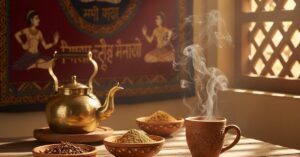
One crisp winter morning, while the world outside thawed from frosty stillness, I found myself cradling a warm cup of chai. Steam played in the crisp air, becoming an ephemeral dance of heat and breath. It was in that quiet moment of holding warmth against cold that the ethos of Yogic Chai began to unveil itself, not as an escapist ritual but as an affirmation of here and now.
Advaita Vedanta: The Philosophy of Non-Duality
In the world of Indian contemplative traditions, Advaita Vedanta emerges as a beacon of non-duality. It speaks of a singular truth: the Self is Brahman. The implication is deep and demands heartful engagement. It is neither the detachment of bypassing comforts nor the aphorism of spiritual shortcuts. Instead, it calls for a profound inquiry into the self’s nature.
Yogic Chai invites you to this philosophical tapestry, where the act of sipping chai parallels the inner journey. Like Ramana Maharshi’s self-inquiry — “Who am I?” — each sip can become a moment of introspection. The warmth of the chai acts as a gentle nudge back to the core self, quiet yet undeniable.
Contemplation in the Cup
The connection between Advaita and chai may seem a transient thread, but it is here we find the essence of mindful living. Consider the act not as metaphoric but paralleled — a longer pause to remind us of the affordances of simplicity, drawing us back toward a holistic understanding of presence.
The Sovereign Self: Authority Within
Individual sovereignty, in the context of Vajrayana Buddhism’s silent conversations with Advaita Vedanta, isn’t a loud declaration but a quiet insistence. It is about listening to the inner witness, that conscience which observes, untouched and unmanipulated by the external world.
In allowing this ‘self’ to emerge, we find parallels with the slow brew of chai. It requires patience and respect for the process, where every grain of spice allows the whole to reach its fullness. Yogic Chai serves as a symbol of sovereignty, a ritual of listening to your own inner path in each deliberate act of brewing.
The Alchemy of Chai Ingredients
To delve into the wellness of chai, we turn to its culinary heart — the spices. Each element contributes notes of soundness, both in tradition and contemporary understanding.
Ginger and Black Pepper
Ginger, revered for its warming properties, suggests a long history of use in Ayurvedic traditions, studied for its potential in digestive and anti-inflammatory support. Black Pepper complements this, offering the body an awakening call — a kind of warming essence that aids in the distribution of life’s energies.
The blend, like a well-composed piece of music, holds its unity against dissonance because of this careful curation. Each component is necessary, creating a harmony where there was once only potential.
Nature and Ritual: Stillness in the Brew
What is it about cradling a cup that soothes the unrest mind? With chai, there is sensory precision encased within the ritualistic experience. The act itself becomes a meditation on being — where simplicity meets complexity in quiet understanding.
Whether on a misty mountain ridge, when moisture embraces the skin, or in the predawn moments of a city now hushed, the sip connects you with something elemental and unassuming. The ritual becomes its own language — one of intimacy with the earth and its offerings.
The Role of Chai in Indian Culture
To travel through India is to experience a symphony of chai’s inclusions. From bustling station platforms, where chai wallahs serve endless streams of commuters, to the familial warmth of home-brewed cups amidst the monsoonal respite, chai has embedded itself into the cultural sinews.
This ubiquitous presence in India offers more than warmth; it is a cultural fabric, a structure to social interactions, and a backdrop to conversations. The chai cup, then, is both a common denominator and a uniquely personal signature — shared yet deeply one’s own.
Regional Variations
The simplicity of Assam or the complex spiciness of a masala reflect regional narratives, each telling a story old as time, whispering history through infusion and aromatic blends.
Culinary Art and the Craft of Chai
In the kitchen, chai finds new life beyond the cup. Its spices impart flavors transcendent in buttery cakes or cross the threshold into savory realms. Understanding why cardamom transforms vanilla allows for creative culinary endeavors that honor the inherent design of nature’s palette.
As you experiment with Yogic Chai’s blends in the kitchen, you engage in a craft rooted in millennia. Like crafting a complex symphony from simple notes, the result is elevated, intentional — not gimmick but genuine.
Conclusion: Yogic Chai as an Invitation
Yogic Chai is more than a beverage; it’s a calling to consider life in its fullness, to immerse oneself in the deep philosophy and rich culture it emerges from, to honor the simple rituals that connect us to our greater selves.
Engage with this symphony of taste, philosophy, and craft. With each cup, explore what it means to be more present, more thoughtful, more aligned with the truths whispered by the earth and revealed in moments of heartfelt simplicity.